The Systems Engineering Era of Quantum Technology

Isn’t quantum computing a loneliness problem? Not the loneliness of the researchers (though I’m sure those late nights in the lab can be isolating). I’m talking about the loneliness of quantum bits themselves. See, quantum computers are like islands, powerful, sophisticated islands, but islands nonetheless. A single quantum processor might hold thousands of qubits, which sounds impressive until you realize that the really transformative applications people dream about, the ones that could crack previously unsolvable problems, might need millions or even billions of qubits working together.

Read More

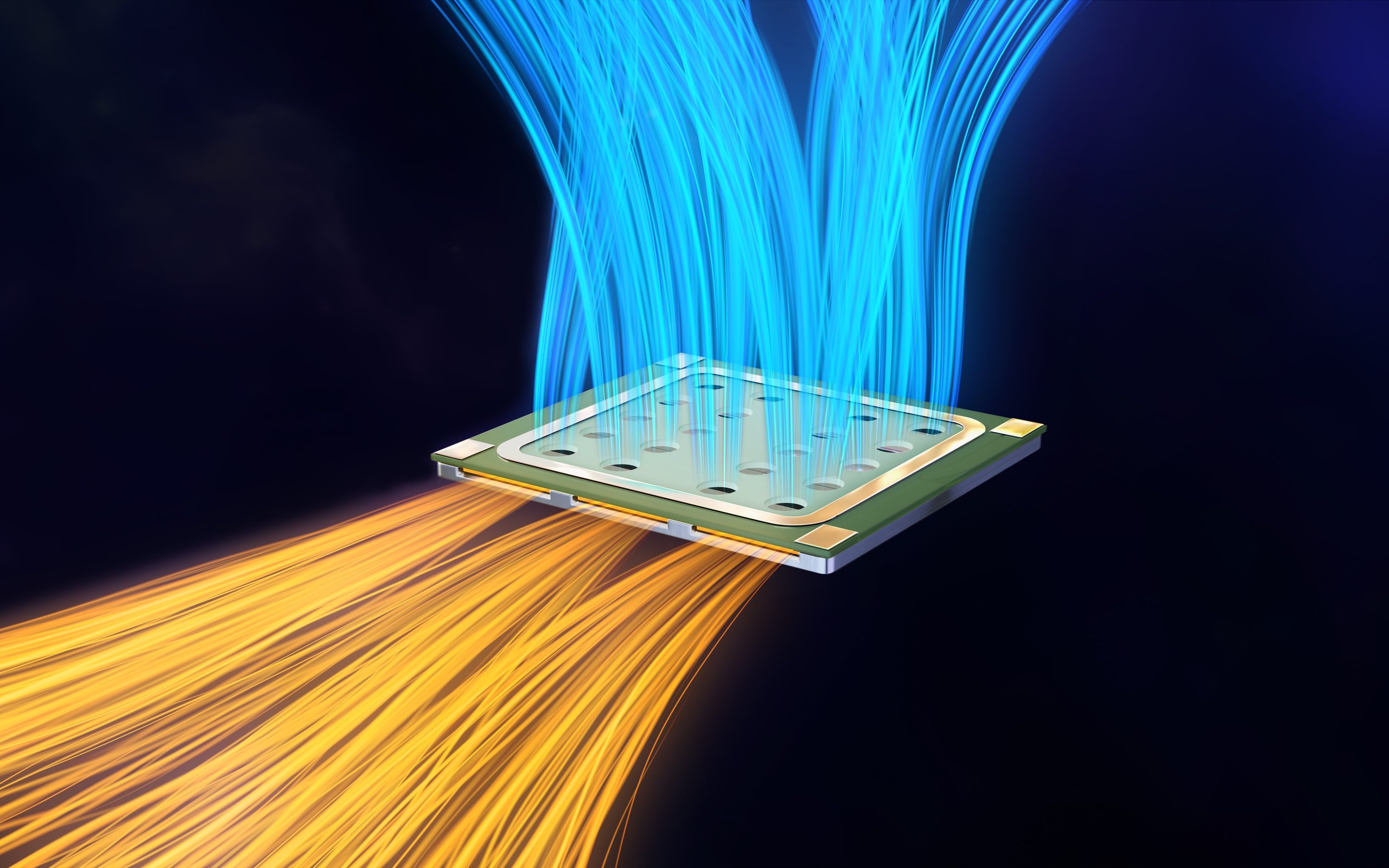
Meet the Chip That Could Change How Your Devices Use Power

Wireless communication seems easy because it happens without us noticing, but inside, devices have to carefully balance sending data quickly, keeping the signal clear, and using as little power as possible. When devices send signals through the air, the signals aren’t always perfect, and using more power to make the signals stronger costs more battery life. That’s why a new transmitter chip from MIT and a few partner universities is turning heads. 

Read More

Making Terahertz Waves Work on a Chip, Without the Bulk

Researchers at MIT have built a small chip that can generate terahertz waves more effectively and more affordably than what’s currently out there. That’s huge, ‘cause terahertz waves sit between radio and infrared on the electromagnetic spectrum, so they can carry more data than radio waves and see through more materials than infrared light. This makes them a promising candidate for faster wireless communication, sharper medical imaging, better security scanners, and smarter environmental monitoring.

Read More

ULVAC and IBM Quantum Team Up to Revolutionize Quantum Computing Cooling

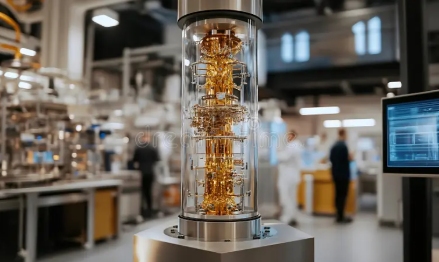
Quantum computing is one of the most promising technological frontiers, but it comes with a major challenge, which is, maintaining the extreme cold temperatures that is required for qubits to function. Today’s quantum computers rely on dilution refrigerators, complex and highly specialized cooling systems that keep qubits operating near absolute zero. However, these systems are expensive, tough to maintain and don’t scale easily.

Read More

Plenty of Room at the Bottom: Thinking Small, Dreaming Big

This document is a written version of a speech given by Richard P. Feynman in 1959, huge shout out to Michigan State University for putting this over internet. Feynman talked about the exciting potential of working with tiny things. He believed that there is a lot we can discover in this area, even though it isn’t directly about basic physics. He was sure that looking into this area could help us grasp difficult subjects more easily and could have many useful applications. Below are some of the ideas covered by…

Read More

Unravelling Superionic Materials: A Breakthrough for Next-Gen Rechargeable Batteries

Researchers at Duke University have discovered the intricate molecular details of a material that might just be the key to next-generation rechargeable batteries. It’s called the superionic material. The compound displays both solid and liquid properties. How? It retains its solid structure, however, the ions within it move as freely as they would in a liquid.

Read More

DNA Origami: Tiny Toolkit for Big Innovations

Super interesting research about DNA has lately surfaced. The blue print of life is not only a research material for biology but now, it is also utilized for building tiny robots! Doesn’t it sound futuristic? With a groundbreaking technique called DNA Origami, scientists at The University of Sidney are turning this sci-fi feat into a reality.

Read More

Interview: Dr. Sukriti Hans, Material Scientist at LIST, Luxembourg

In a rapidly evolving world where technological advancements meet the growing demand for sustainability, Dr. Sukriti Hans stands at the forefront of materials research. Currently a Junior R&T Associate at the Luxembourg Institute of Science and Technology (LIST), Dr. Hans is playing a pivotal role in developing high-resolution characterization methods that can redefine the future of materials science.

Read More

Neutron Innovation: Precise Temperature Measurement for Electronics

We are constantly surrounded by electronics. From LEDs to batteries, these electronics have become part of our lives. And so, more advanced and intricate components are needed to make them more efficient and reliable. However, as these components become increasingly sophisticated, getting reliable temperature measurements of specific elements inside an object can be a challenge.

Read More

Interview: Dr. Andy Wang, a Bioelectronics Scientist at the University of Cambridge, England

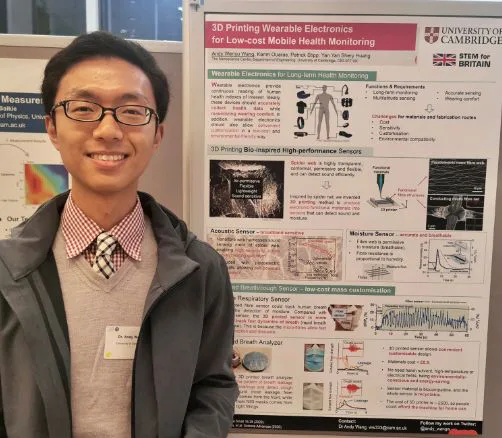
Meet Dr. Andy Wang, PhD, a leading researcher in the Biointerface Group at the University of Cambridge, under the esteemed Prof. Shery Huang. Dr. Wang brings a wealth of expertise to the field, having earned a Bachelor’s degree in Mechanical Engineering from the prestigious Tsinghua University in 2016, followed by a PhD in the same field from the world-renowned Cambridge University Engineering Department in 2021.

Read More

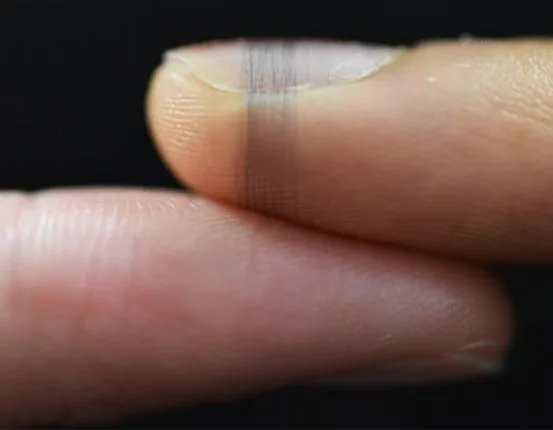
Electronic Spider Silk: A Versatile Solution for Bioelectronics

Super-thin and flexible electronics are here to stay. This tech will not only create but it will also revolutionize the use of gadgets. Since, it leads to unlimited possibilities for innovative and practical applications. Some of the them include but not limited to – wearable tech, portability, healthcare applications, space probes etc.

Read More

Interview: Dr. Shoji Takeuchi, a Biohybrid Systems Scientist at The University of Tokyo, Japan

Welcome to our chat with Dr. Shoji Takeuchi, a Biohybrid Systems Scientist rocking it at The University of Tokyo. Dr. Takeuchi’s research covers a bunch of cool stuff like Biohybrid Systems, MEMS, Microfluidics, Tissue Engineering, and Artificial Cell Membrane. Basically, he’s all about blending biology and tech to create awesome bio-hybrid systems.

Read More

Innovative SiPh Chip: Nanoscale Light Computing Breakthrough

Imagine a world where AI computations are not bound by the limitations of traditional power sources, that is, electricity but by the power of light waves. This is precisely the vision that researchers at the University of Pennsylvania have brought to life with their innovative chip design. This innovation will not only enable the chip to fast-track the processing speed of computers but it will also lessen their energy consumption.

Read More